
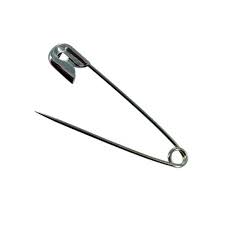
One of the oldest tools in any kit. Small but seriously useful.
A safety pin is a simple metal clasp pin with a protective sheath that prevents the sharp point from causing injury. In a first aid context… safety pins have multiple practical uses that most people overlook.
According to the Philippine Red Cross Personal First Aid and Survival Kit standard contents, safety pins (10 pieces) are a listed item.
They’re used primarily to secure triangular bandages (slings), hold dressings in place, and create improvised closures.
They were actually one of the earliest emergency medical tools and are still valued today for their simplicity and reliability.
No batteries, moving parts and it never expires.
This is one of the most low-maintenance yet genuinely useful items in your kit.
What it’s used for:
- Secure a triangular bandage sling around the neck so it holds the arm in place
- Pin a dressing or bandage to clothing to keep it from slipping
- Mark the time on a bandage or dressing during an emergency
- Improvised pin for closing a torn garment during evacuation
- Various improvised uses in disaster and field situations
Why it belongs in your emergency kit:
- Triangular bandages cannot properly function as a sling without a pin to secure them
- Provides a quick, reliable fastening method when tape or clips aren’t available
- 10 pins take up almost zero space and weigh almost nothing
- Costs next to nothing… P10 for a full card at any tindahan or pharmacy
- Zero maintenance, no expiry, no batteries
| PROS | CONS |
| Zero cost, zero weight, zero maintenance | Sharp point is a hazard if not handled carefully, especially around children |
| Essential for securing slings from triangular bandages | Can rust if stored in humid environments (very relevant in humid Davao) |
| Multiple improvised uses in field or emergency situations | Limited in function compared to medical tape or bandage clips |
| Never expires if stored dry | Easy to lose because of small size |
| Included in Philippine Red Cross official survival kits | Not sterile… should not be used inside wounds |
