
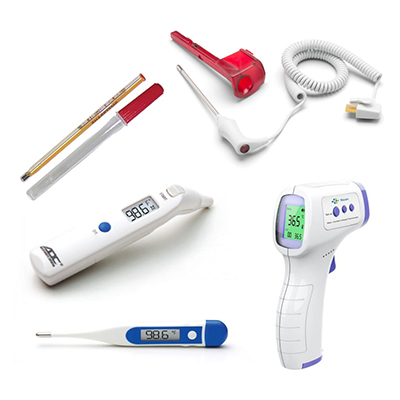
Because guessing someone’s temperature with your hand is not first aid.
A thermometer is a medical instrument used to measure body temperature. In first aid and home healthcare… it is one of the most basic and most essential diagnostic tools you can have.
Normal human body temperature is approximately 36.1 to 37.2 degrees Celsius.
A fever is generally considered 38 degrees Celsius and above. A fever is one of the body’s primary responses to infection, and knowing whether someone has a fever, how high it is, and whether it is rising or falling, directly guides treatment decisions and the urgency of seeking medical help.
A reliable digital thermometer is critical during typhoon recovery (when waterborne and respiratory illnesses spike), during dengue outbreaks (fever monitoring is essential for dengue management), and for children who get fevers frequently.
What it’s used for:
- Measure body temperature to detect fever accurately
- Monitor fever progression to track whether a patient is improving or worsening
- Determine urgency of medical attention (high or rising fever = seek help faster)
- Monitor temperature in dengue and other fever-related illnesses common in the Philippines
- Check temperature of infants and children who cannot verbalize how they feel
Why it belongs in your emergency kit:
- You cannot properly manage a fever without knowing the actual temperature
- Dengue fever is common in Davao… temperature monitoring is a key component of dengue management
- Children’s fevers can spike rapidly… early detection allows faster intervention
- Doctor consultations via telemedicine require accurate temperature readings
- During disasters, respiratory and waterborne infections increase and temperature monitoring is essential
| PROS | CONS |
| Quick and accurate… digital thermometers give results in seconds | Requires batteries (check and replace regularly in your kit) |
| Affordable… P150 to P800 at Davao pharmacies | Cheap mercury thermometers are hazardous if broken and should be avoided |
| Non-contact infrared thermometers provide hygienic readings without contact | Digital thermometers need calibration and can give incorrect readings if damaged |
| Essential for managing dengue, flu, and other febrile illnesses common in the Philippines | Non-contact infrared types can be less accurate in cold or draft conditions |
| Useful for monitoring multiple family members including infants | Rectal temperature (most accurate for infants) requires specific technique |
