
Okay, I think I became a bit of a doomsday prepper before I even knew what the word meant.
When I was a kid, we had this large book at home… one of those thick, reference books all about what to do in case of accidents and emergencies.
I don’t remember the exact title but I remember flipping through it, looking at the illustrations, thinking… “wow, someone actually thought all of this through.”
That book planted a seed.
And that seed grew into the person I am today, someone who genuinely thinks about emergency preparedness and talks about it maybe a little too much at family dinners.
Then I married a doctor…
My wife used to be part of the pioneer team of physicians spearheading the emergency medicine program right here in Davao City.
She didn’t finish her specialization as an emergency medicine specialist, life got in the way, but the things she learned during that time?
They stuck.
We have emergency kits everywhere in the house.
We used to have an emergency tool kit in the car too, specifically for road accidents. Because she knew, from experience, that emergencies can happen anytime.
Why Every Filipino Home Needs a Go Bag
According to a 2024 nationwide survey of over 4,600 Filipinos, only 27% of Filipinos have prepared a go bag.
Only 33% have a first aid kit.
Only 20% have a written disaster management plan for their family.
And we are… the most disaster-prone country in the world.
Three consecutive years running, the Philippines has been ranked number one.
Not a tittle anyone wants.
We sit on the Pacific Ring of Fire.
We get hit by an average of 20 typhoons a year.
We have active volcanoes.
We have fault lines running under cities.
Flooding happens in areas that never used to flood.
And yet most of us don’t have a bag packed.
Most of us are betting that it won’t happen today.
The thing is… emergencies don’t wait for us to be ready.
And here in Davao, we know this better than most.
Davao Is Not Exempt
People sometimes think Davao is “safe” because we don’t get as many direct typhoon hits as other parts of the country.
And yes, geographically, we’re somewhat protected. But…
A 7.2 magnitude earthquake hit offshore Davao Oriental in December 2018. Strong earthquakes rocked Mindanao in 2019, causing landslides and damaging thousands of homes.
Flash floods happen here.
Fires happen here.
And none of them gave anyone enough warning to go shopping for supplies first.
So What Exactly Is a Go Bag?
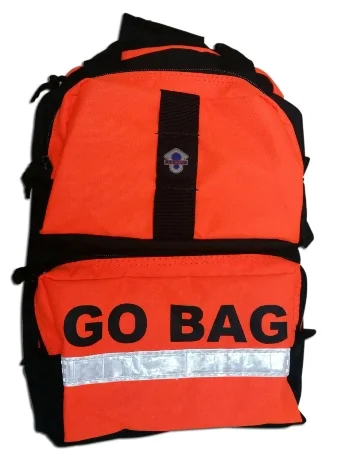
A go bag (also called a grab bag, bug-out bag, or 72-hour bag) is exactly what it sounds like. It’s a bag you pack ahead of time with everything you need to survive for at least 72 hours (3 days) after a disaster strikes, whether you’re sheltering in place or evacuating.
The 72-hour standard exists because that’s roughly how long it can take before rescue efforts, government relief, or help from outside reaches affected communities. And in the Philippines where emergency services are sometimes stretched thin… the real waiting time can be even longer.
So the idea is simple: be your own rescue for the first three days.
The bag should be waterproof, sturdy, light enough to carry, and kept somewhere you can grab it in seconds.
Not in the basement.
Not buried behind boxes.
Near the door.
Easy to reach.
Choose a waterproof backpack that can be carried comfortably even by your smallest adult family member. It should close securely and not fall apart under pressure. You don’t want a bag held together by hope when you’re wading through floodwater.
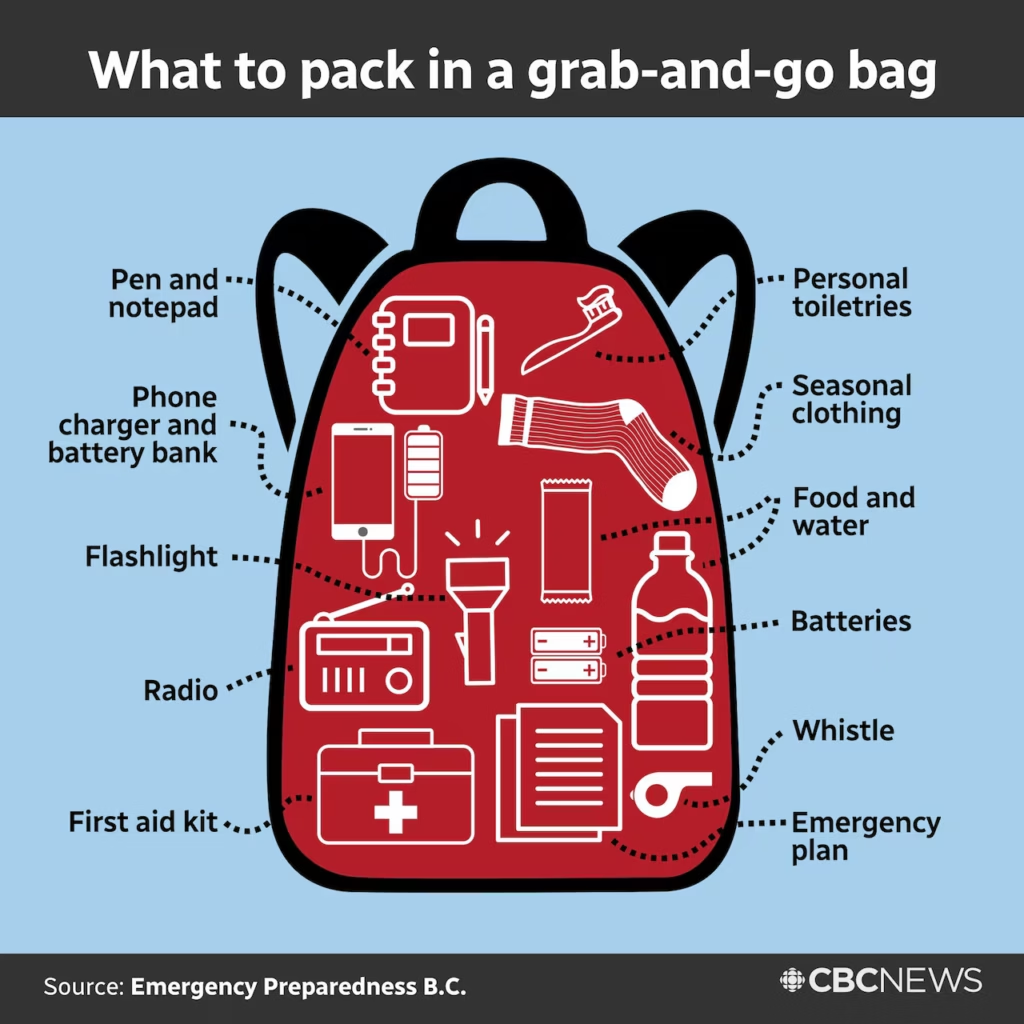
Water
- At least 3 bottles of water per person per day (that’s 9 bottles for 3 days minimum)
- Water purification tablets or a small water filter if possible
- Electrolyte sachets (ORS or oral rehydration salts) are a great addition, especially in the Philippine heat
Food (3-Day Supply)
- Non-perishable food only: canned goods (sardines, corned beef, beans), instant noodles, energy bars, biscuits, nuts, peanut butter, ready-to-eat packs
- Don’t forget a manual can opener. (Sounds obvious. You’d be surprised.)
- Stick to food your family actually eats. Emergencies are not the time to experiment.
Medical Supplies
This is one area where I personally go a bit extra because of my wife’s background…
- First aid kit with band-aids, antiseptic wipes, gauze pads, medical tape, scissors
- Pain relievers (paracetamol, ibuprofen)
- Antihistamines (for allergic reactions)
- Anti-diarrhea medication
- Wound disinfectant (betadine, alcohol)
- Medical gloves (at least 3 pairs)
- Maintenance medications — at least 3 to 7 days supply of any medicines your family members take regularly. This is critical. Do not skip this.
- Copies of prescriptions
- Thermometer
- Mosquito repellant
Lighting
- Flashlight with extra batteries, or a crank/solar-powered flashlight
- Candles and matches or a lighter (keep in a waterproof container)
- Headlamp (so your hands stay free)
Communication
- Battery-powered or hand-crank AM/FM emergency radio
- Fully charged powerbank (10,000mAh or higher) for your phone
- A written list of emergency contacts because if your phone dies and you borrow someone else’s, you need those numbers somewhere other than your phone memory
- Emergency hotlines to know:
- Philippine Red Cross: 143
- NDRRMC Operations Center: (02) 8911-5061 to 65
- Davao City Emergency Hotline: 911
Important Documents
Pack these in a waterproof envelope or ziplock bag:
- Photocopies (or USB copies) of: PSA birth certificates, passports, national ID, marriage certificate, property documents, insurance papers, medical records
- Emergency contact list (including an out-of-town relative or friend who won’t be affected by the same disaster)
- Some cash in small bills and coins — ATMs and e-wallets may not work when the power is out
Clothing and Personal Items
- Change of clothes for each family member (1-2 sets, practical and weather-appropriate)
- Extra underwear and socks
- Sturdy closed-toe shoes or rubber boots
- Emergency blanket (those thin silver mylar ones are light and effective)
- Rain poncho
- Work gloves
Hygiene and Sanitation
- Antibacterial soap
- Toothbrush and toothpaste
- Hand sanitizer
- Wet wipes
- Tissue
- Menstrual pads (often forgotten but essential)
- Diapers and wet wipes if you have a baby at home
- Mosquito repellant (yes, I’m listing it twice because Davao)
Tools and Safety
- Whistle (one per family member) — if you’re trapped under rubble or floodwater, a whistle carries farther than your voice
- Multi-tool or Swiss army knife
- Rope or paracord
- Plastic bags (for waterproofing items inside and for sanitation)
- Face masks or N95 respirators
Special Considerations by Family Member
| Family Member | Additional Items |
| Infants / Toddlers | Formula milk, extra diapers, baby food, baby wipes, comfort toy |
| Elderly | Extra maintenance meds, mobility aids, extra eyeglasses, hearing aid batteries |
| Persons with Disability | Any assistive devices, extra batteries, copies of medical records |
| Children | Small comfort item (stuffed toy, favorite book) to reduce panic |
| Pregnant or Lactating | OB-GYN’s contact number, extra hygiene supplies, prenatal vitamins |
| Pets | Pet food, leash, collar with ID tag, carrier, small water dish |
Complete Go Bag Checklist at a Glance
| Category | Items |
| Water | 3 bottles/person/day, purification tablets, ORS sachets |
| Food | Canned goods, biscuits, bars, instant food, manual can opener |
| Medical | First aid kit, maintenance meds, thermometer, gloves, repellant |
| Documents | IDs, certificates, prescriptions, emergency contacts, cash |
| Light/Power | Flashlight, batteries, candles, powerbank, headlamp |
| Communication | Emergency radio, contact list, CDRRMO hotline |
| Clothing | Change of clothes, socks, shoes, rain poncho, emergency blanket |
| Hygiene | Soap, toothbrush, sanitizer, wet wipes, tissue, sanitary pads |
| Tools | Whistle, knife/multi-tool, rope, plastic bags, face masks |
| Misc | Comfort item for kids, pet supplies if needed |
How to Prepare Before a Disaster Hits
Having a go bag is step one. But preparedness doesn’t stop there…
- Know your evacuation route. Where is the nearest evacuation center from your barangay? What’s the safest path to get there? Practice it. Don’t just know it in theory.
- Designate a family meeting point. If you’re all separated when a disaster hits, where do you go? Decide this now, not in the middle of a storm.
- Have an out-of-town contact person. Someone outside your area who can act as a communication hub for your family members in case local lines are overloaded.
- Check your go bag every year. Replace water and food before they expire. Replace old batteries. Update prescriptions. Make sure the kids’ clothes still fit.
- Tell every family member where the bag is. If you’re not home when it happens, your family needs to be able to grab it without you.
- Secure your home. Strap down heavy furniture, know where your gas valve and electrical breakers are, and store your LPG tank properly (fires and explosions from LPG tanks are a real risk in Philippine emergencies).
What To Do During an Emergency
- Stay calm. Panic is what gets people hurt. Breathe. Think. Then move.
- Grab your go bag. You should be able to do this in under 60 seconds.
- Follow official advisories. Check PAGASA, your local CDRRMO, and barangay announcements. Don’t rely on social media alone.
- Evacuate early if advised. Don’t wait for the last minute. “Bata pa ang baha” is never the right call.
- Help neighbors who may need assistance — especially the elderly, those with young children, or those with disabilities.
Pros and Cons of Having a Go Bag
| Pros | Cons |
| You can evacuate immediately without scrambling | Takes a bit of time and money to put together initially |
| Self-sufficient for the first 72+ hours | Needs to be checked and updated at least once a year |
| Reduces panic because you’re already prepared | Takes up storage space (though not much) |
| Protects important documents that can’t be replaced | Some items expire and need replacing |
| Every family member knows the plan | You have to actually remember where you put it |
| Peace of mind — before, during, and after | — |
| Can help neighbors who weren’t prepared | — |
Honestly… the cons are small. The pros can literally save lives. There’s no real argument against having one.
My Personal Setup
My wife and I don’t just have one go bag. We have emergency kits in different parts of the house. We used to have one in the car too, specifically a roadside emergency kit, because when you’re with a former emergency medicine doctor, you start thinking about these things differently. You start seeing risk where other people see routine.
I genuinely think every home in Davao, and in the Philippines as a whole, should have at least one go bag per family. Ideally, one per person if the family is large enough. And if you have elderly parents, small children, or any family member with medical needs… their bag needs to be customized for them.
This is not being overly cautious. This is being responsible.
Start today.
Seriously.
You don’t have to do it all at once.
Start with the most critical things: water, food, first aid, and documents.
Then build from there over the next few weeks.
You don’t need a fancy bag.
You don’t need to spend a lot of money.
You just need to start.
The Philippines is a beautiful country.
And it is also a country where disasters are not a matter of “if” but “when.”
The best thing we can do for the people we love is to be ready when that day comes.
Recommended Products to Build Your Go Bag
Waterproof Emergency Backpack
Complete First Aid Kit
High-Capacity Powerbank (Solar/Crank)
Emergency Radio (Battery/Crank-Powered)
That big book I read as a kid started something in me. A quiet kind of awareness that emergencies are real, that they happen to real people, and that the best thing you can do is prepare before they arrive.
I’ve seen how my wife thinks about these things after her years in emergency medicine.
I’ve seen how a simple kit in the car can make a difference at a road accident. And I’ve read enough, watched enough, and lived in this country long enough to know that waiting is not a strategy.
Pack the bag.
Know the plan.
And then you can rest a little easier, knowing that if the worst happens, you and your family are not completely at the mercy of the moment. Ingat lagi.
