Okay so here’s the thing… I never really thought about heat stroke and heat exhaustion as something I needed to seriously study.
I mean, I knew it was bad to stay too long under the sun.
That’s common sense.
But running a farm changes your perspective on things pretty fast.
We have a farm.
And our workers are out there, sometimes right under the heat of the sun… we do give them wide-brimmed hats, we constantly remind them to drink water, but still, I worry.
There are parts of the farm where it gets really, really hot.
And because the property is large… and because of the trees, workers might not be noticed immediately if something goes wrong.
That’s the part that scares me the most.
So I started reading, watching videos, going through care guides and websites, just trying to understand what can happen and what I should do if it does.
And if you live here in Davao City, this isn’t just a farm problem.
It’s a city problem too.
Davao Is Hot. Like, Seriously Hot.
In April 2025, Davao City’s heat index reached up to 39 degrees Celsius, prompting the City Disaster Risk Reduction and Management Office (CDRRMO) to issue a public advisory warning residents that extreme heat could lead to heat cramps, heat exhaustion, and even heat stroke.
And that’s not even the worst it’s been.
Back in April 2024, Davao City was among 36 areas in the Philippines expected to experience a “dangerous” heat index level, with temperatures reaching 42 degrees Celsius. That’s… extremely uncomfortable.
And dangerous.
2024 was the warmest year in the Philippines since records began in 1951.
And things are not getting cooler.
So this is not something we can just ignore and hope for the best.
What Is Heat Exhaustion?
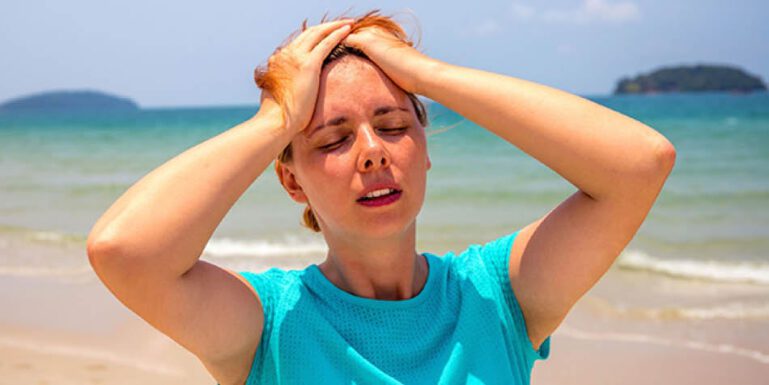
Heat exhaustion is a heat-related illness where the body can no longer cool itself effectively, usually happening in high temperatures or during intense physical activity.
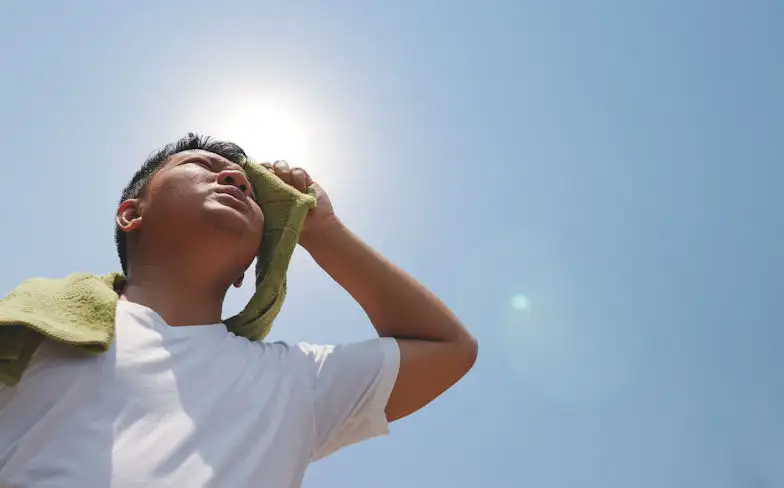
In heat exhaustion, the body’s core temperature ranges from 37°C to 40°C (98.6°F to 104°F).
Symptoms include heavy sweating, weakness, dizziness, headache, nausea, and low blood pressure, caused by dehydration and the loss of salts and minerals from the body.
So basically… your body is working really hard to cool itself down, sweating a lot, but it’s losing the battle.
You feel weak, dizzy, maybe a little sick.
But you’re still kind of aware of what’s happening to you.
That’s an important distinction we’ll get to in a moment.
Signs of Heat Exhaustion:
- Heavy, profuse sweating
- Pale or cool, moist skin
- Weakness and fatigue
- Dizziness or lightheadedness
- Headache
- Nausea or vomiting
- Muscle cramps
- Fast, weak pulse
- Low blood pressure when standing up
Untreated heat exhaustion can progress to heat stroke, which is a life-threatening condition.
So when you see these signs, you act.
You don’t wait.
What Is Heat Stroke?
This is the serious one. This is the one that can kill.
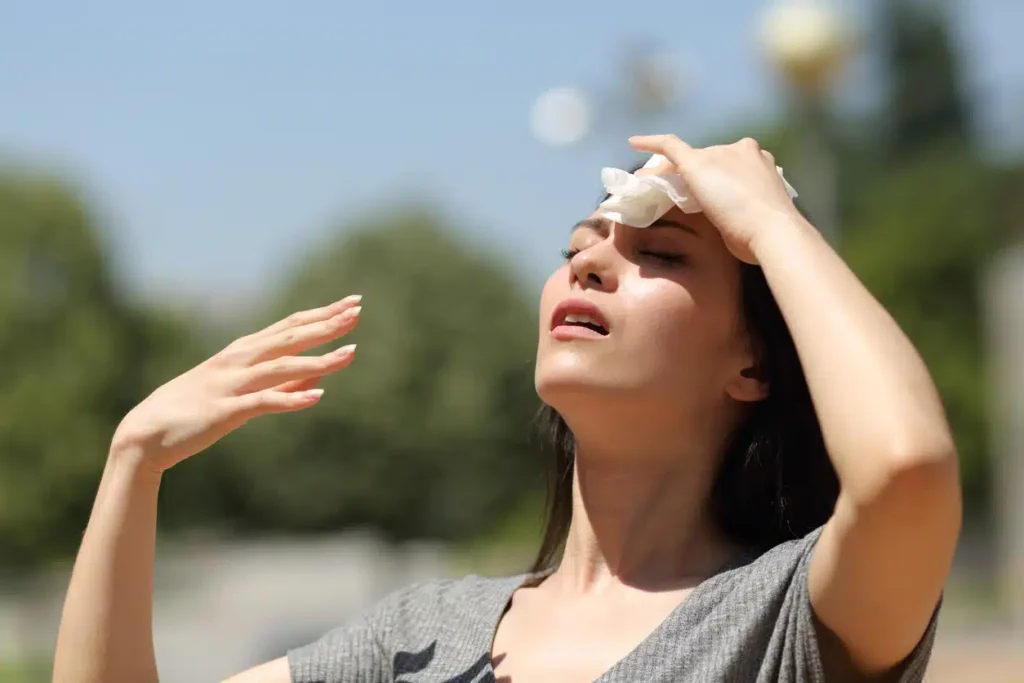
Heat stroke is a severe heat illness that results in a body temperature greater than 40°C (104°F), along with red skin, headache, dizziness, and confusion.
It is a life-threatening condition due to the potential for multi-organ dysfunction, with typical complications including seizures and kidney failure.
Heat stroke is universally fatal if untreated, and mortality approaches 30% even with treatment. Read that again. Even with treatment, up to 30% of severe cases don’t make it. That is not a number you play around with.
There are actually two types of heat stroke:
1. Classic (Non-Exertional) Heat Stroke This happens slowly, over a period of days. It’s seen in the elderly, young children, the chronically ill, and those on certain medications like anticholinergics or diuretics, often during heat waves. Elderly people sitting inside a hot room with no electric fan, for example. That’s a real risk.
2. Exertional Heat Stroke This has a rapid onset during exercise or physical exertion, and is seen in otherwise young, healthy individuals like athletes, military personnel, and laborers. This is the type I’m most concerned about on the farm.
A healthy, strong worker… can still collapse under the heat if pushed too long.
Signs of Heat Stroke:
- Body temperature above 40°C (104°F)
- Confusion, agitation, slurred speech
- Hot, red skin (dry or sometimes sweaty)
- Rapid, strong pulse
- Loss of consciousness or unresponsiveness
- Seizures
- No sweating (in classic heat stroke), or heavy sweating (in exertional heat stroke)
One of the earliest warning signs of heat stroke is inappropriate behavior, which may present before confusion or loss of consciousness sets in. So if someone is acting strangely, suddenly agitated, or just “off” while working under the sun, don’t dismiss it.
The Big Difference: One Quick Table
This is the part I really needed when I first started learning about this. What separates heat exhaustion from heat stroke?
| Heat Exhaustion | Heat Stroke | |
| Body Temp | 37°C to 40°C | Above 40°C |
| Skin | Cool, pale, moist (heavy sweating) | Hot, red, possibly dry |
| Mental State | Aware, may feel faint or dizzy | Confused, disoriented, unconscious |
| Sweating | Yes, profuse | May or may not sweat |
| Severity | Serious but manageable | Medical emergency |
| Can they talk? | Usually yes | Often no, or incoherently |
| Risk of death | Low if treated quickly | High even with treatment |
The primary things that separate heat stroke from heat exhaustion are central nervous system dysfunction and a core body temperature above 40°C. In simple words: if they are confused, unconscious, or acting strange and burning hot to the touch… that is heat stroke.
Call for help immediately.
Why Knowing the Difference Matters
Because the response to heat exhaustion and heat stroke one is different.
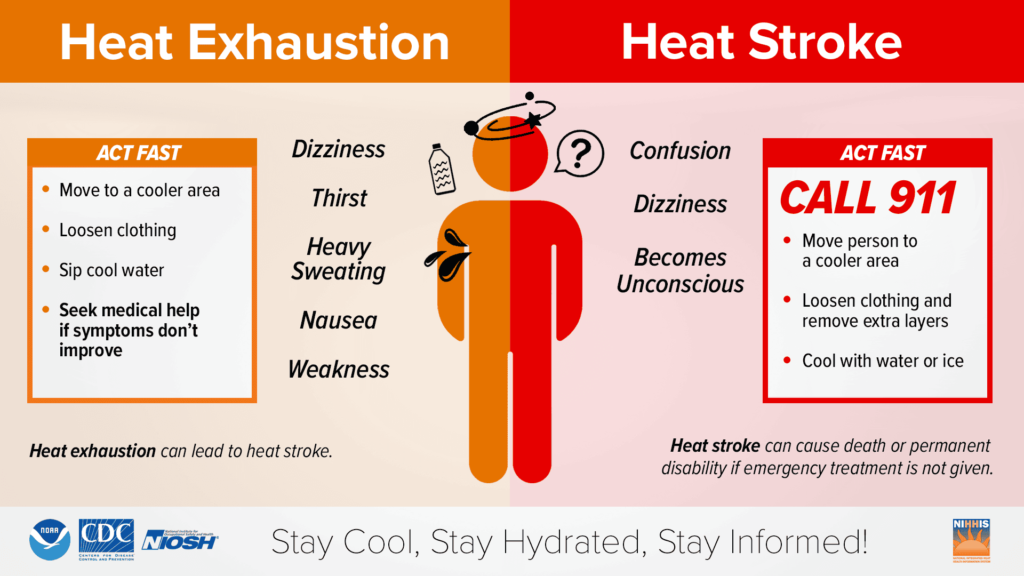
For heat exhaustion, you can help someone recover with the right first aid. For heat stroke, you need to cool them down rapidly AND get them to a hospital or emergency room as fast as possible.
One is “act now and monitor.”
The other is “act now and call 911.”
The Davao City Health Office emphasized that heat stroke is a medical emergency that could lead to death if immediate medical attention is not provided.
So this is not something to handle at home and hope it passes.
It is not like a headache.
What To Do If You See Someone Suffering
For Heat Exhaustion:
- Move them to a cool, shaded area immediately. Get them out of the sun.
- Have them lie down and elevate their legs slightly.
- Give them water to drink slowly, if they are conscious and can swallow. Sports drinks with electrolytes (like Gatorade) help.
- Cool them down — wet cloth on the forehead and neck, fan them, loosen their clothing.
- Monitor them closely. If they do not improve within 15 minutes, or if they start getting confused, call for medical help.
For Heat Stroke — This Is an Emergency:
- Call for emergency help immediately. In Davao, call your nearest hospital or 911. Philippine Red Cross emergency hotline is 143.
- Move them to a cool area right away.
- Start cooling them as fast as possible:
- Spray or pour cool water on their body
- Put ice packs or cold wet towels on their neck, armpits, and groin
- Fan them vigorously
- If possible, immerse them in cool water (cold water immersion is actually the most effective cooling method according to WikEM)
- Do NOT give them water to drink if they are confused or unconscious. They may choke.
- Do NOT give aspirin or paracetamol — this does not help heat-related fever and can cause harm.
- Stay with them until help arrives.
Recommended cooling methods include spraying the person with water while using a fan, placing ice packs around the body, or giving cold intravenous fluids if available. Do as much of this as you can while waiting for emergency help.
How To Prepare For It (Before It Happens)
This is the part I think about a lot because I believe that prevention is always, always better than treatment.
For Farm Workers and Outdoor Workers:
- Schedule heavy work in the early morning or late afternoon. The hottest time of day is usually between 10am and 3pm. That’s when you limit heavy exertion.
- Provide shade and rest areas. Workers should not have to walk far to find shade.
- Mandatory hydration breaks. Not “drink when you feel like it”… actual scheduled breaks with water available.
- Watch the new workers. Gradually acclimatizing to hot conditions is one of the key prevention strategies. People who are new to outdoor work are most at risk in the first few days.
- Buddy system. Especially in areas of the farm where workers can’t easily be seen, pair people up so someone is always watching.
For Everyone in Davao City:
- Drink water throughout the day. Don’t wait until you’re thirsty. By the time you feel thirsty, you’re already on your way to dehydration.
- Avoid alcohol, softdrinks, and coffee during extreme heat. These actually make dehydration worse.
- Wear loose, light-colored, breathable clothing.
- Use sunscreen and a wide-brimmed hat outdoors.
- Avoid being outdoors during peak heat hours (10am to 3pm).
- Check on the elderly and young children. Heat stroke in children and the elderly can occur within minutes, even in a car with a window slightly open. Never leave them in a parked car under the sun.
- Use an electric fan or aircon during the hottest parts of the day. If you don’t have one at home, go to a mall, a public place, or a cooling center.
PAGASA Heat Index Guide:
| Heat Index | Classification | Risk Level |
| 27°C – 32°C | Caution | Fatigue possible with prolonged exposure |
| 33°C – 41°C | Extreme Caution | Heat cramps and exhaustion possible |
| 42°C – 51°C | Danger | Heat cramps and exhaustion likely, heat stroke possible |
| 52°C and above | Extreme Danger | Heat stroke imminent |
Who Is Most at Risk?
- Outdoor workers (farm workers, construction workers, pedicab drivers, sidewalk vendors)
- The elderly — their bodies don’t regulate heat as well
- Young children — their thermoregulatory system is not yet fully developed
- People with heart disease, diabetes, or kidney problems
- People taking certain medications (diuretics, antihistamines, antidepressants)
- Athletes and anyone doing intense physical activity outdoors
- People who are not used to the heat — tourists, newcomers, workers on their first days
Pros and Cons of Knowing This Information
I know this sounds like a strange section, but hear me out…
| Pros of Knowing | Cons or What Happens If You Don’t |
| You can recognize the signs early before it gets worse | You might mistake heat stroke for just being “masakit ang ulo” (headache) and do nothing |
| You can act quickly and correctly when someone needs help | Wrong first aid (like giving water to an unconscious person) can make things worse |
| You can prevent it from happening in the first place | Workers or family members are put at unnecessary risk |
| Builds a culture of safety in the workplace and at home | Someone suffers longer, increasing the risk of organ damage or death |
| Confidence to respond calmly in an emergency | Panic leads to inaction or wrong action |
| You can protect elderly family members at home | They may suffer in silence, unnoticed, until it’s too late |
We live in a hot, humid city and the heat becomes a real danger when we ignore the signs and don’t know what to do.
I would recommend that everyone, especially anyone with elderly family members at home, workers who go outdoors, or anyone managing a team of people who work under the sun, take the time to read up on this.
Watch videos.
Take a first aid course.
The Philippine Red Cross offers first aid and basic life support training right here.
Their emergency hotline is 143, and their trunkline is +63 2 8790 2300.
Knowledge is still the best first aid you can have.
Recommended Products to Help You Prepare
Having the right tools makes a real difference. Here are some things I’d suggest looking into:
Cooling Towel / Instant Ice Pack
Wide-Brimmed Hat / Sun Hat (for outdoor workers)

Oral Rehydration Salts / Electrolyte Sachets
Digital Thermometer (to check body temperature quickly)
Final Thoughts
Summer in Davao… and really anywhere in the Philippines… is not something to take lightly anymore. The temperatures are climbing, the heat index is getting higher every year, and heat-related illnesses are becoming more common. By 2030, up to 11 million Filipinos could face dangerous heat indices above 42°C, and that number could rise to 74 million by 2050. That’s not a distant problem. That’s happening in our lifetime.
Know the signs. Know the difference. And please, if you have workers, have elderly parents, or have kids who play outside… pass this information on. It might just save someone’s life.
Stay cool, everyone. Hydrate. And check on the people around you.