
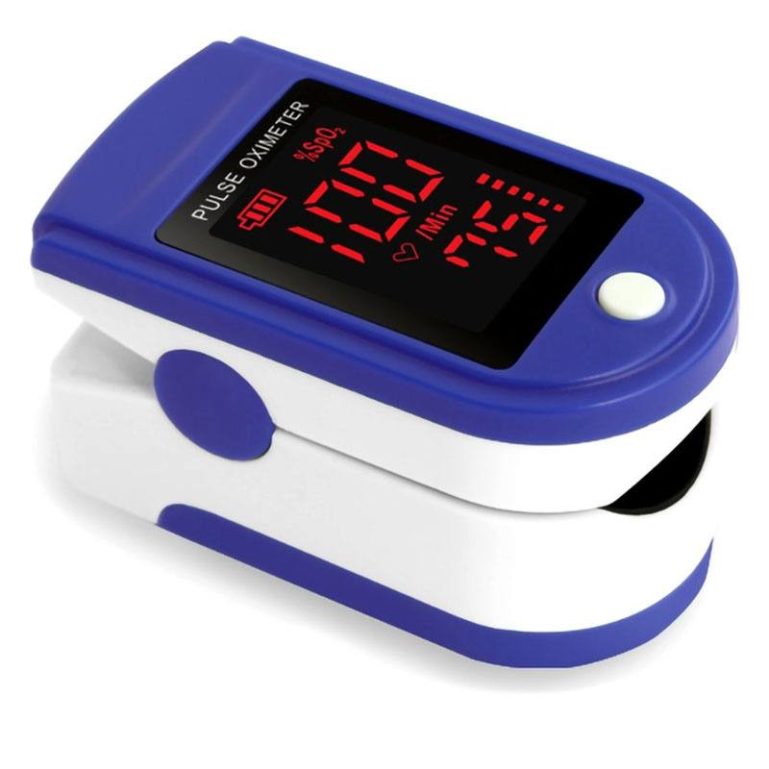
I remember that during the pandemic, we bought a pulse oximeter.
But then again… my wife is a doctor so… we really needed one, pandemic or not.
And also… since my dad’s company does sell pulse oximeters, I’ve seen it dozens of times in the past.
What we got was a small clip-on device you put on your fingertip that shows two numbers on a little screen.
But I’ve never really understood what a pulse oximeter does or why it’s important.
So… after decades of putting it off… I’m finally going to try and understand what a pulse oximeter is and why it’s important.
A pulse oximeter (pulse ox-ih-MEE-ter) is a small, non-invasive device that measures two things: your blood oxygen saturation level (SpO2) — the percentage of oxygen your red blood cells are carrying — and your pulse rate (heart beats per minit).
It works by shining a light through your fingertip and measuring how much oxygen is in your blood based on how that light is absorbed.
No needle.
No blood.
Just a clip and a reading.
| SpO2 Reading | What It Means | What to Do |
| 95% to 100% | Normal — good oxygen levels | Nothing, you’re fine |
| 91% to 94% | Below normal — watch closely | Rest, recheck, call a doctor if it stays low |
| 90% and below | Low — this is a medical concern | Go to the ER — do not wait this out |
How to Read It Correctly
- Warm your hand first — cold fingers give false low readings; rub your hands together for 30 seconds before clipping
- Stay still and keep your hand at heart level — movement and holding your arm up or down affects accuracy
- Wait for the reading to stabilize — give it 30 to 60 seconds, not just a glance
- Remove nail polish if you are wearing it — dark polish, especially blue or black, can interfere with the light sensor
- Check the pulse rate too — a normal resting pulse is 60 to 100 beats per minute; very high or very low readings alongside low SpO2 means go to a doctor
If you get a reading consistently below 94% and you feel short of breath, do not wait.
Head to the nearest emergency room.
A pulse oximeter is a screening tool — it tells you something is worth checking, not what the diagnosis is.
That part still requires a real doctor.
So Yeah, That’s All for Today
Keep it charged, keep it in your first aid kit, and actually know what the numbers mean before you need to use it in a panic.
A decent pulse oximeter costs PHP 350 to PHP 800 at most pharmacies — that is one of the best small investments a Filipino household can make.
But owning it is only half the job.
Knowing how to read it is the other half.
And knowing is half the battle! Yo Joe! (Sorry, couldn’t help it)

If something looks off, trust the device and see a real doctor immediately.
DISCLAIMER
This article is for informational purposes only and does not constitute medical advice. Please consult a licensed physician for diagnosis and treatment.
