
Most Filipino first aid kits have the basics — cotton balls, betadine, plasters, maybe a roll of gauze.
What they almost never have, and what most people would not know to buy even if they saw it on the shelf at a pharmacy, is wound closure strips.
They look like thin adhesive tape.
They are easy to overlook. And they are, for certain types of wounds, significantly more effective than anything else in that kit.
Wound closure strips — commonly called Steri-Strips, which is the 3M brand name that became the generic term — are narrow adhesive bandages designed to pull the edges of a cut together and hold them closed while the skin heals underneath.
Think of them as a non-invasive alternative to stitches for wounds that are clean, straight, and not too deep. Not every cut needs a hospital. But every cut needs to be closed properly. This is the tool that lets you do that at home, correctly, without a needle.
What are Steri-Strips
Steri-Strips are made from a porous, breathable material with a medical-grade adhesive on one side.
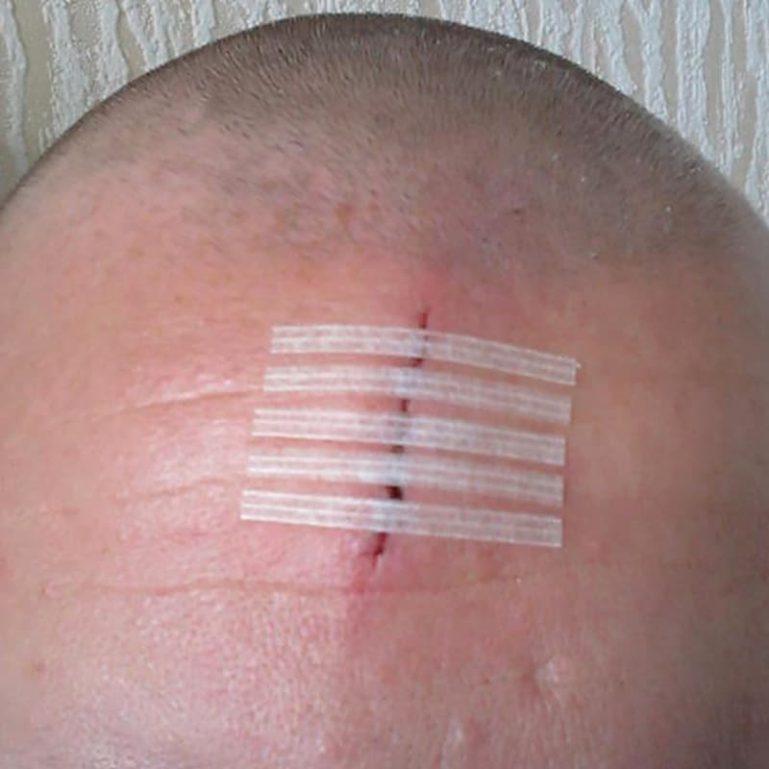
You apply them perpendicular to the wound — crossing over the cut like the rungs of a ladder — pulling the skin edges gently together with each strip.
The porosity (tiny holes in the material) allows the skin underneath to breathe and reduces the warm, moist environment that bacteria thrive in.
They hold the wound edges in approximation (close together) while new tissue forms across the gap, which is exactly what stitches do, just without piercing the skin.
| Use Steri-Strips When… | Do NOT Use Steri-Strips When… |
| The cut is clean, straight, and less than 2cm long | The wound is deep enough to see fat, muscle, or bone |
| The bleeding has stopped with gentle pressure | Bleeding will not stop after 10 minutes of firm pressure |
| The wound edges can be held together without tension | The cut is on a joint, knuckle, or high-movement area — strips will not hold |
| The skin around the wound is dry and intact | The wound is on the face of a child — scarring risk warrants a doctor |
| It is a minor laceration on a low-movement area like the arm or torso | The skin is wet, oily, or the wound shows signs of infection |
How to Apply Them Correctly
- Clean the wound first — rinse with clean running water, then apply a thin layer of antiseptic; let the skin dry completely before applying any strip
- Do not stretch the strip — lay one end down on one side of the wound, gently bring the wound edges together with your fingers, then lay the other end down; the strip holds the position, it does not do the pulling
- Apply strips parallel to each other, perpendicular to the cut — spacing them about 3mm apart along the length of the wound
- Add one strip on each side running parallel to the wound after — these anchor strips prevent the perpendicular ones from peeling at the ends
- Leave them in place until they fall off on their own — typically five to seven days; do not peel them off early; getting them wet shortens their hold significantly
- Watch for infection — increasing redness, warmth, swelling, pus, or fever means the wound needs a doctor regardless of how well the strips are holding
What It Costs and Where to Find It
| Product | Approximate Cost in Davao |
| 3M Steri-Strip (original, per pack) | PHP 80 to PHP 200 depending on size and quantity |
| Generic wound closure strips | PHP 30 to PHP 80 at any pharmacy |
| ER visit for stitches (government hospital) | PHP 200 to PHP 600 plus materials |
| ER visit for stitches (private hospital) | PHP 800 to PHP 2,500 depending on wound and clinic |
The cost comparison is not to discourage you from going to the ER when you need to — it is to illustrate that for the right kind of wound, a PHP 80 pack of closure strips used correctly produces the same outcome as a much more expensive and time-consuming hospital visit.
The key phrase is ‘the right kind of wound.’ Knowing the difference is the whole point.
A small cut that is properly closed heals faster, scars less, and is significantely less likely to get infected than one that is just covered with a plaster and left to manage itself.
And if a wound is ever bigger, deeper, or bloodier than you can confidently handle — go to the nearest ER.
Strips are first aid, not a substitute for medical care.
DISCLAIMER
This article is for informational purposes only and does not constitute medical advice. Please consult a licensed physician for diagnosis and treatment of wounds.
