
Indonesia’s fires just answered that question for us.
Hazards of the Haze
From August 30 to September 2, 2026, Metro Manila’s air quality hit acutely unhealthy levels — more than four times the WHO recommended guideline — as transboundary haze from forest and peatland fires in Kalimantan, Indonesia drifted across the South China Sea toward the Philippines via the southwest monsoon.
Eleven monitoring stations in Metro Manila recorded acutely unhealthy PM2.5 readings. Here in Davao, the Calinan Station recorded elevated particulate matter levels across the same period, with air quality reaching unhealthy levels.
PM2.5 — particulate matter smaller than 2.5 micrometers — is fine enough to bypass the nose and throat entirely and penetrate deep into the lungs and bloodstream. It is invisible to the naked eye.
You cannot smell it at low concentrations.
And it is exactly what was drifting over Mindanao while most of us were going about our day without a mask, let alone a face shield.
Which brings us back to a question a lot of Filipinos stopped asking after 2022: do I still need a face shield?
Looking at haze, motorcycle exhaust, construction dust, wildfire smoke, and the ongoing reality of respiratory illness in a tropical, densely populated country — is yes.
Just not for the same reasons as before.
Disposable Face Shield
A face shield is not a respirator.
It does not filter particulate matter the way an N95 mask does.
Instead, what it does is protect the mucous membranes (the moist tissues of the eyes, nose, and mouth) from direct splash, droplet, and large-particle exposure.
Think chemical splash, blood or fluid exposure in first aid situations, ash and debris from fires or earthquakes, high-velocity particulate during grinding or cutting, and the direct spray of respiratory droplets from a cough or sneeze at close range.
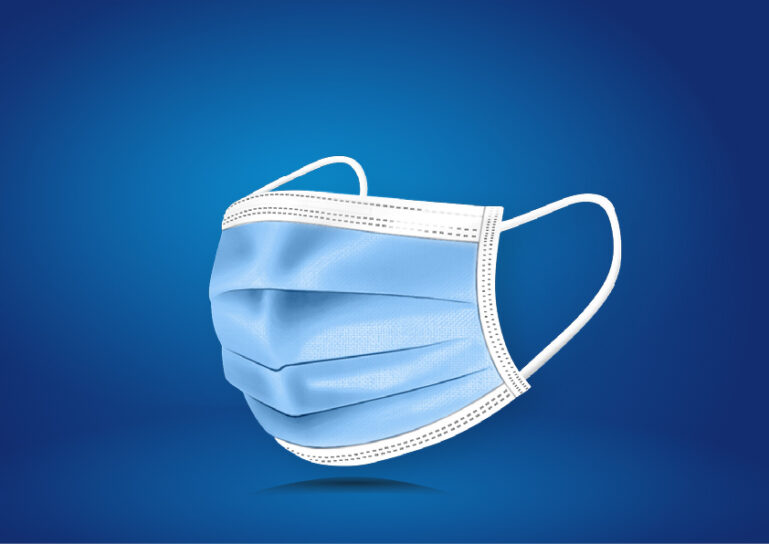
During the haze event, the correct answer for outdoor protection was a well-fitted face mask — ideally an N95 or KN95 rated to filter fine particulate — worn over the nose and mouth.
A face shield worn alone would not have adequately filtered PM2.5. But worn together, a mask plus a face shield provides layered protection: the mask filters what you breathe, the shield protects your eyes and face from the airborne particles that irritate the conjunctiva (the membrane covering the eye) and skin.
Face Shield vs. Face Mask: When to Use Which
| Situation | Face Mask Needed | Face Shield Adds Value |
| Haze or heavy air pollution outdoors | Yes — N95 or KN95 minimum | Yes — protects eyes from irritants |
| First aid with bleeding or fluid exposure | Yes — surgical mask minimum | Yes — essential; protects face and eyes from splatter |
| Dusty environment (construction, grinding) | Yes — dust mask minimum | Yes — protects eyes from debris |
| Crowded indoor spaces, mild respiratory risk | Yes — surgical or cloth mask | Optional — minimal added benefit alone |
| Ash fall from nearby fire or volcanic event | Yes — N95 strongly recommended | Yes — protects eyes and face from ash |
What to Keep in Your Kit

- At least 5 disposable face shields per household member — they are single-use in contamination scenarios and should not be reused after fluid exposure
- N95 or KN95 masks — not surgical masks — for haze, smoke, and heavy pollution events; surgical masks do not filter fine particulate adequately
- Combination: during any serious air quality event, wear both — mask for filtration, shield for surface protection
- Store them in a sealed bag in your go bag and your home first aid kit; disposable shields degrade in humidity over time if left open
In Davao, disposable face shields cost PHP 15 to PHP 50 per piece at most pharmacies and medical supply stores. A box of ten runs PHP 120 to PHP 400 depending on quality. N95 masks from reputable brands run PHP 40 to PHP 120 per piece. Neither is expensive. Not having them when Kalimantan decides to burn again — and it will — is the more costly choice.
The pandemic normalized the face shield and then the cultural backlash to the pandemic normalized getting rid of it.
That was understandable.
What was not understandable was throwing out the entire concept of facial PPE along with the COVID-era habits.
Haze from Indonesia, volcanic ash from any number of active Philippine volcanoes, earthquake debris, chemical exposure in a first aid scenario — these are not pandemic problems.
They are permanent Philippine realities. Keep the shields. Keep the masks. Know the differance between what each one does. And when the next haze rolls in from Kalimantan, you will not be standing outside squinting into smoky air wondering where you put them.
DISCLAIMER
This article is for informational purposes only and does not constitute medical advice. Please follow DENR-EMB and DOH advisories during air quality events.
