
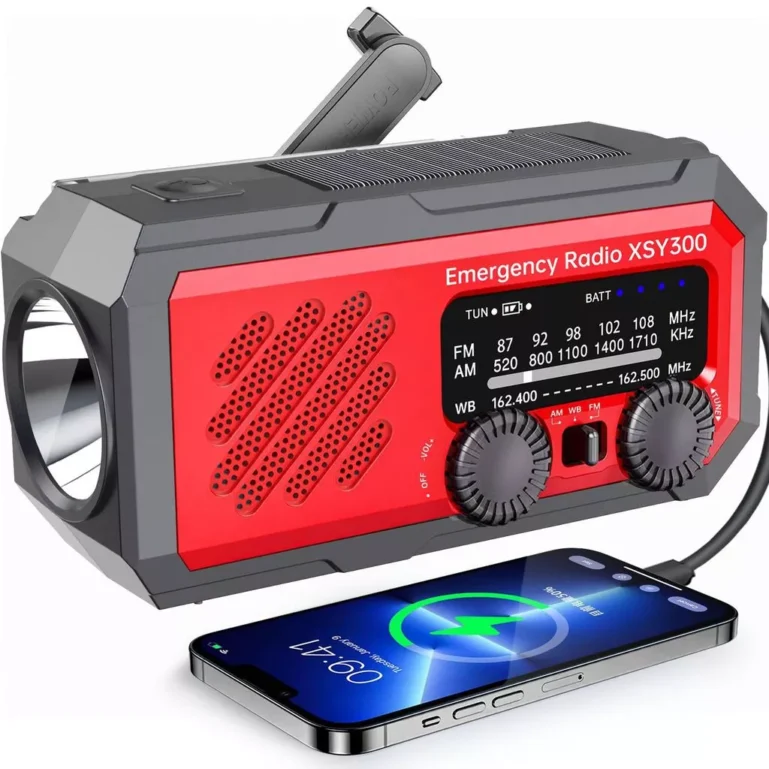
When your phone has no signal and the power is out… this is your lifeline.
A rechargeable emergency radio is a battery-powered or hand-crank/solar radio capable of receiving AM, FM, and ideally NOAA weather or shortwave broadcasts. During disasters and prolonged emergencies… it becomes one of the most critical communication tools you can have.
A battery-operated or hand-crank radio is a recommended essential in any Go Bag.
When mobile networks are congested or down after a typhoon or earthquake… radio broadcasts from local stations, PAGASA, and NDRRMC remain operational and provide critical life-saving information.
The best models include AM/FM/NOAA/weather bands, hand-crank power generation, solar charging, and a built-in LED flashlight and phone charging port via USB.
What it’s used for:
- Receive official emergency and disaster advisories from PAGASA, NDRRMC, and local government
- Monitor weather updates, evacuation orders, and rescue information during typhoons
- Communicate and stay informed when mobile networks and internet are down
- Access local radio stations for real-time local updates
- AM/FM reception for news, emergency announcements, and survival information
Why it belongs in your emergency kit:
- Mobile networks often become congested or fail during major emergencies
- PAGASA and NDRRMC broadcast life-critical typhoon and earthquake information via radio
- Local Davao government emergency broadcasts are disseminated via radio first
- Hand-crank models work without electricity or charged batteries
- A radio with a USB charging port can also keep your phone alive longer
Pros and Cons:
| PROS | CONS |
| Works independently of internet and mobile networks which often fail in disasters | Battery-only models need batteries replaced or recharged regularly |
| Hand-crank models require no external power source | Reception quality depends on your location and distance from transmitters |
| Can receive official PAGASA and NDRRMC emergency broadcasts | Hand-crank radios can be tiring to operate for extended listening |
| Multi-band models (AM/FM/NOAA) provide maximum coverage | Cheap models may have poor reception or short battery life |
| Models with USB port, solar panel, and flashlight are all-in-one emergency tools | Digital tuning models need power to save frequencies while analog dial models don’t |
